
Protect Your Stuart Investment: The Modern Alternative to a Traditional Seawall
Living in Stuart offers an unparalleled waterfront lifestyle, with stunning views and direct access to the St. Lucie River and the Intracoastal Waterway. These properties represent not just a home, but a significant financial investment. However, this idyllic setting faces growing threats from erosion, powerful storm surges, and the steady creep of rising sea levels, all of which put these valuable assets at risk. As Stuart’s leading source for real estate news and analysis, stuartrealestatenews.com is dedicated to helping homeowners protect and enhance their property value. We’ve researched the most effective ways to safeguard your shoreline investment for the long term. This article will explore the significant limitations of traditional seawalls and introduce a modern, more resilient alternative that not only protects your property but also benefits the local environment you cherish.
Key Takeaways
- Traditional seawalls can cause more harm than good by increasing erosion on adjacent properties and destroying natural habitats.
- Living shorelines are a modern alternative that uses natural materials like plants, sand, and rock to stabilize the coast and absorb wave energy.
- For Stuart property owners, living shorelines offer superior long-term protection, enhance property aesthetics and value, and are more environmentally sustainable.
- While initial costs can be comparable to seawalls, living shorelines often have lower long-term maintenance costs and can increase property value.
TL;DR
Traditional seawalls are often an outdated and damaging solution for shoreline erosion in Stuart. A modern alternative, called a “living shoreline,” uses natural elements to provide better, more sustainable protection for your waterfront investment while improving the local ecosystem.
Why Are Traditional Seawalls a Growing Concern for Stuart Property Owners?
A traditional seawall can actually worsen erosion over time by reflecting wave energy, which scours the seabed and undermines the structure’s foundation. This process, known as “flanking,” can also damage neighboring properties that lack similar hard protection, creating a cascade of problems along the waterfront.
The High Cost of Installation and Repair
The upfront financial investment for a concrete or vinyl seawall is significant, often running into tens or even hundreds of thousands of dollars depending on the length and height. But the expenses don’t stop there. These structures require ongoing maintenance to address cracks and subsidence. After major storms, repairs can be extensive and costly. Ultimately, all seawalls have a finite lifespan and will require a complete, and equally expensive, replacement.
Negative Environmental Impacts
Hardened seawalls create a stark, unnatural barrier between land and water, effectively eliminating the vital intertidal zone. This area is a critical habitat for countless marine species, from oysters and crabs to juvenile fish that support our local fisheries. By removing this habitat, seawalls create an ecological “dead zone.” Furthermore, they prevent the natural filtration of runoff that vegetated shorelines provide, which can contribute to a decline in local water quality.
The Problem of “Flanking” and Failure
One of the most significant issues with seawalls is how they manage wave energy. Instead of absorbing it, they reflect it. This deflected energy scours the sediment at the base of the wall, a process that can eventually undermine the structure and lead to its collapse. The energy is also pushed sideways to the ends of the wall, where it aggressively erodes unprotected neighboring properties.
Flanking: This is the term for erosion that occurs at the ends of a hard shoreline structure like a seawall. It can lead to disputes between neighbors and often results in a domino effect, where one seawall necessitates the construction of another, and so on, until the entire shoreline is armored and ecologically barren.
What Is the Modern Alternative to a Seawall?
The leading modern alternative is a “living shoreline,” an engineered solution that uses natural materials to stabilize the coast and maintain its ecological functions. This innovative approach works with nature, rather than against it, to protect your Stuart property from erosion and storm surge.
Defining the Living Shoreline
A living shoreline is a protected, stabilized shoreline made of natural materials. It is designed to grow and adapt over time, offering a resilient barrier against coastal erosion.
Living Shoreline: A shoreline management practice that provides erosion control benefits; protects, restores, or enhances natural shoreline habitat; and maintains coastal processes through the strategic placement of plants, stone, sand, or other structural and organic materials.
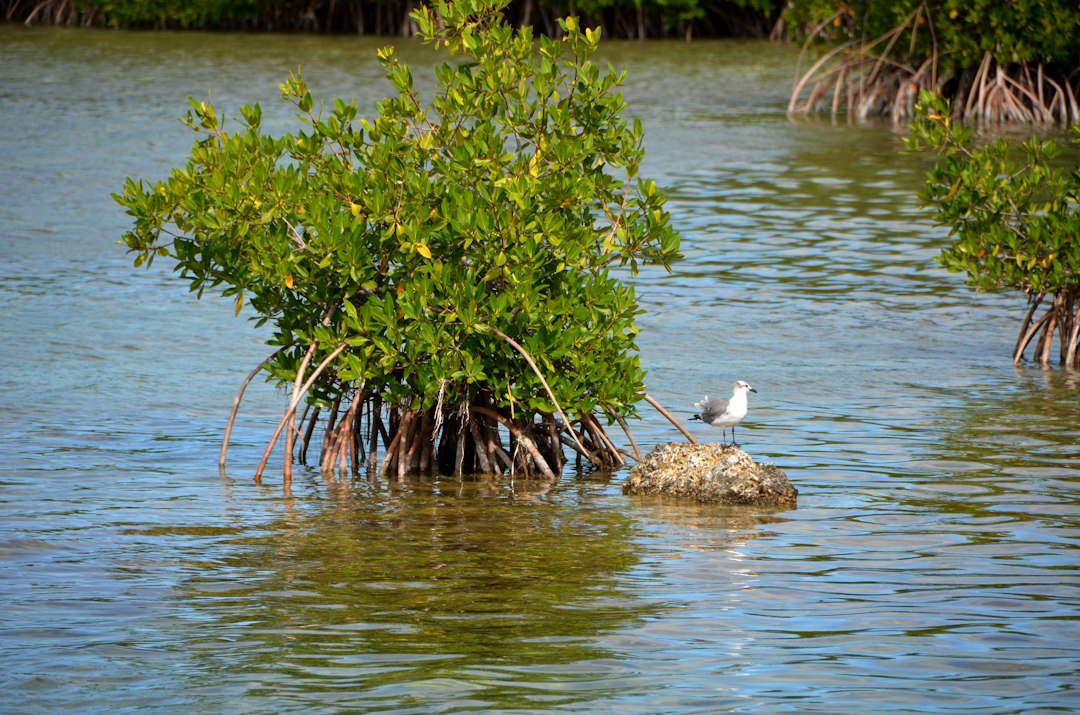
These projects often use a combination of native vegetation like saltmarsh cordgrass and mangroves, supplemented with biodegradable materials, sand, and strategically placed rock sills or oyster reefs. For a deeper dive into the specifics, you can review this comprehensive guide to living shorelines and sustainable waterfront land.
How It Works: Absorbing, Not Reflecting
The core principle behind a living shoreline’s success is its ability to absorb and dissipate wave energy. Unlike a concrete wall that reflects waves, the complex structure of a living shoreline—with its grasses, roots, and oyster shells—slows the water down and reduces its force. The extensive root systems of native plants act like a natural net, binding the soil and sand together to prevent it from washing away.
Types of Living Shorelines
Living shorelines are not a one-size-fits-all solution. They are custom-designed based on the specific conditions of a property, such as the amount of wave energy it experiences.
- Softer Approaches: In low-energy environments like protected coves, a living shoreline might consist entirely of native marsh grasses and mangroves.
- Hybrid Models: For more exposed coastlines in Stuart that face stronger wave action, a hybrid approach is often used. This combines vegetation with structural elements like a low-profile rock “sill” or oyster reef placed just offshore. This structure breaks up the strongest waves before they reach the shore, allowing the vegetation behind it to thrive.
How Do Living Shorelines Protect Property Better Than Seawalls?
Living shorelines provide superior, adaptive protection by absorbing wave energy, growing stronger over time, and naturally adjusting to changing environmental conditions. Their resilience makes them a smarter long-term investment against erosion and storm surge compared to a static, brittle seawall.
| Feature | Traditional Seawall | Living Shoreline |
|---|---|---|
| Wave Interaction | Reflects energy, causing scour | Absorbs and dissipates energy |
| Habitat Impact | Eliminates intertidal zone | Creates and restores habitat |
| Maintenance | High (crack repair, replacement) | Low (occasional monitoring) |
| Adaptability | Static, vulnerable to failure | Self-repairing, adapts to sea-level rise |
| Aesthetics | Hard, artificial barrier | Natural, lush landscape |
| Long-Term Cost | High due to repairs/replacement | Lower due to self-sufficiency |
Superior Wave Energy Absorption
The effectiveness of living shorelines is well-documented. A study found that natural shorelines experienced significantly less erosion than bulkheads during Hurricane Irma. According to the National Oceanic and Atmospheric Administration (NOAA), just 15 feet of marsh can absorb 50 percent of incoming wave energy, demonstrating their incredible protective power. This absorption minimizes scour and protects the integrity of your property line.
Self-Repairing and Adaptable
When a concrete seawall cracks, it requires human intervention and costly repairs. In contrast, a living shoreline is a dynamic system. If vegetation is damaged during a storm, it can often regrow and re-establish itself. Furthermore, these natural systems are uniquely suited to adapt to our changing climate. The vegetation traps sediment, allowing the shoreline to gradually build elevation over time, which can help it keep pace with slow and steady sea-level rise.
Enhanced Storm Surge Buffer
The wide, sloping, and textured profile of a living shoreline provides a much more effective buffer against storm surge than a vertical wall. By slowing the advance of floodwaters and absorbing wave energy, it can reduce the extent of inland flooding and minimize damage to structures on the property, offering an added layer of protection during Florida’s hurricane season.
Are Living Shorelines More Cost-Effective for a Stuart Homeowner?
While initial installation costs can be similar to a traditional seawall, living shorelines often prove more cost-effective due to significantly lower long-term maintenance and repair expenses. They are a durable, self-sustaining investment in your property’s future.
Upfront Cost Comparison
The cost of any shoreline project varies widely based on site conditions and project size. Generally, the installation cost for a living shoreline can be comparable to, and sometimes less than, that of a vinyl or concrete seawall. Importantly, because of their environmental benefits, living shoreline projects may be eligible for federal, state, or local grants and cost-sharing programs that can help offset the initial investment.
Long-Term Maintenance Savings
This is where living shorelines truly outshine their concrete counterparts. A seawall is a depreciating asset that requires constant vigilance and expensive repairs over its lifespan. A living shoreline, once established, requires very little maintenance—mostly just monitoring to ensure the vegetation remains healthy. This lack of major repair cycles translates to significant long-term savings for the homeowner.
Impact on Insurance and Property Value
As awareness of coastal resilience grows, properties with smart, sustainable infrastructure are becoming more attractive. Some insurance providers may look favorably upon features that demonstrably reduce storm risk. More directly, the aesthetic and recreational benefits of a living shoreline can substantially boost your property’s market value, a topic we explore across many of our posts and articles.
How Does a Living Shoreline Affect My Stuart Property’s Value?
A living shoreline can significantly increase your Stuart property’s value by enhancing its natural beauty, improving water access, and demonstrating a modern, sustainable approach to shoreline management. As experts in the local market, stuartrealestatenews.com recognizes this as a key feature that elevates a property’s appeal.
Boosting “Shore” Appeal
Aesthetics play a huge role in property valuation. A living shoreline transforms a hard, sterile barrier into a lush, green landscape that blends seamlessly with the natural beauty of the St. Lucie River. This natural edge attracts birds, fish, and other wildlife, creating a vibrant and desirable environment right in your backyard.
Improving Recreational Access
A vertical seawall can make it difficult to access the water. A gently sloping, vegetated shoreline provides a much more user-friendly transition. It’s perfect for launching a kayak or paddleboard, fishing from the bank, or simply allowing children and pets to safely enjoy the water’s edge. This enhanced usability is a tangible benefit that adds to the property’s overall value.
A Key Differentiator in the Real Estate Market
In a competitive market, unique features make a property stand out. A living shoreline is a premium, forward-thinking upgrade that signals a well-maintained and resilient home. It appeals directly to a growing demographic of buyers who are environmentally conscious and prioritize sustainability, making your property more attractive to a wider pool of potential investors. Exploring the various tags and topics we cover can provide further insight into what modern buyers are looking for.
What Is the Process for Installing a Living Shoreline in Florida?
The process involves a site assessment by a marine contractor, followed by a design and permitting phase with agencies like the FDEP, and finally, professional installation. Engaging experts familiar with Stuart’s local regulations in Martin County is crucial for a smooth and successful project.
Step 1: Site Assessment and Consultation
The first step is to hire a qualified marine contractor or environmental consultant who specializes in living shorelines. They will evaluate your property’s specific characteristics, including wave energy, slope, and existing erosion, to determine the most appropriate design.
Step 2: Design and Permitting
Based on the assessment, the consultant will create a detailed design plan. This plan is then submitted for permits. In Florida, this typically involves coordination with the Florida Department of Environmental Protection (FDEP) and potentially the U.S. Army Corps of Engineers, as well as Martin County’s local environmental division. An experienced contractor will be able to navigate this regulatory process efficiently.
Step 3: Installation and Establishment
Once permits are secured, the installation can begin. This may involve grading the shoreline, bringing in sand, placing rock sills or oyster bags, and planting the native vegetation. After installation, there is an establishment period where the plants take root and the shoreline begins to mature into a stable, self-sustaining system.
Final Thoughts: A Smarter Way to Protect Your Stuart Investment
Protecting your waterfront property in Stuart is about more than just building a wall against the water; it’s about making a smart, resilient, and forward-thinking investment. While traditional seawalls have been the go-to solution for decades, they are increasingly proving to be a costly, short-sighted fix that harms the very environment that makes our community so special.
Living shorelines represent a superior solution. They are more effective at reducing wave energy, more resilient in the face of storms, and more cost-effective over the long term. By choosing to work with nature, you not only provide better protection for your home but also enhance its beauty, increase its value, and contribute to the health of the St. Lucie River ecosystem. For more information on a wide range of real estate topics, we invite you to browse the complete list of pages on our site.